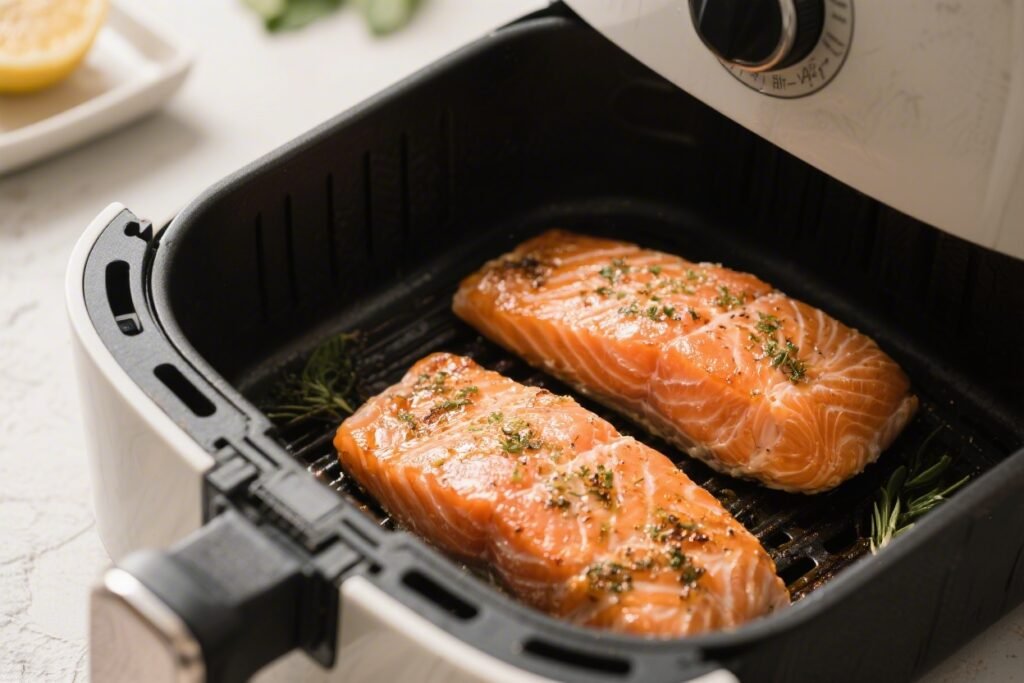
Cooking salmon straight from the freezer feels like a shortcut, but it doesn’t have to taste like one. With an air fryer, you can go from rock-solid fillets to tender, flaky salmon in under 20 minutes. No thawing, no fuss, and no messy pans.
This method is perfect for busy weeknights or whenever you want a healthy dinner without planning ahead. Once you try it, you’ll wonder why you ever thawed salmon in the first place.
Why This Recipe Works
Air fryers circulate hot air quickly, which helps frozen salmon cook evenly and develop a lightly crisp exterior. That means you get a great texture without a long wait.
Seasoning the fish halfway through lets the spices stick once the surface thaws, so flavors don’t slide off. A quick brush of oil locks in moisture and prevents sticking. The result is salmon that’s juicy in the center and perfectly cooked from edge to edge.
Recipe Card
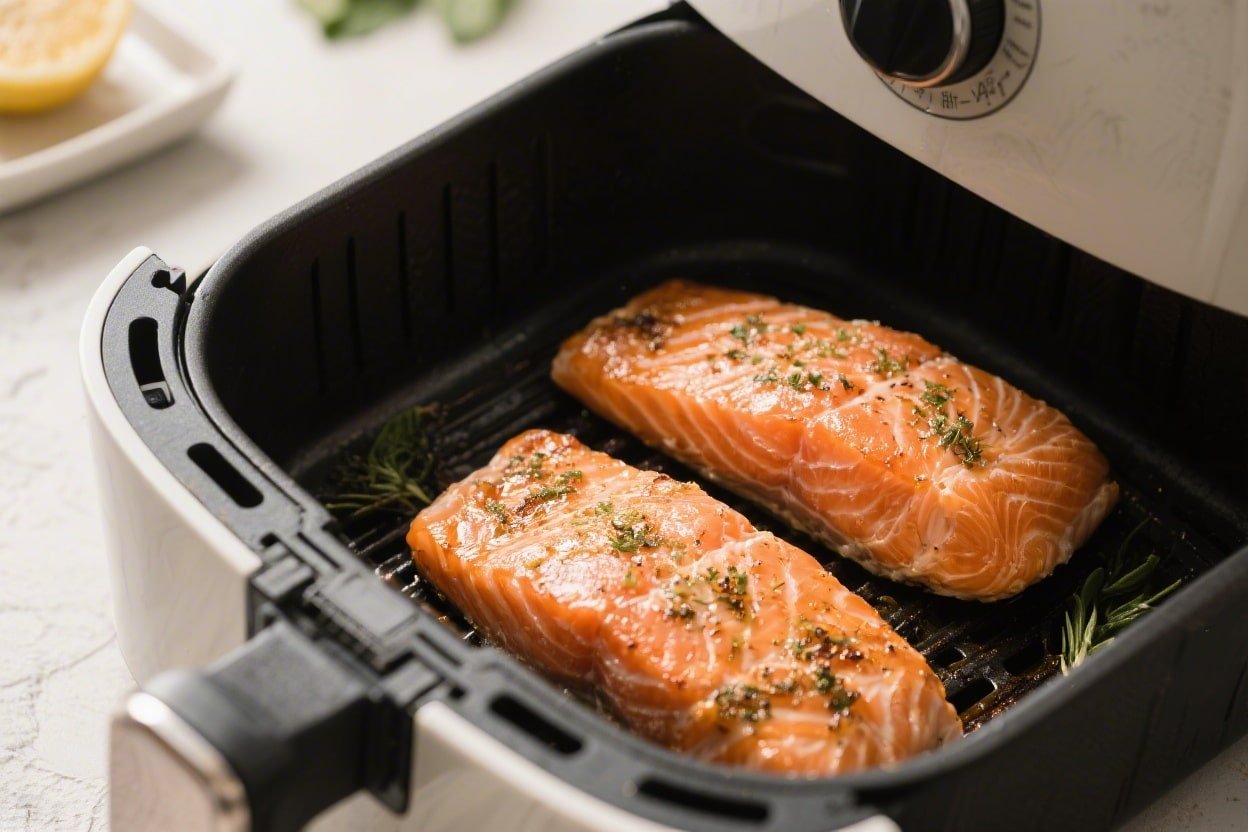
How to Cook Frozen Salmon in the Air Fryer
Ingredients
Method
- Preheat the air fryer to 390°F (200°C). A hot basket helps the salmon cook evenly and crisp up slightly. If your model doesn’t preheat, just let it run empty for 3–4 minutes.
- Prep the basket. Lightly spray the basket with nonstick spray or brush with oil. This prevents sticking, especially with skin-on fillets.
- Add the frozen salmon skin-side down. Don’t season yet. Place the fillets in a single layer with a little space between them so the air can circulate.
- Cook for 6–7 minutes to thaw and set the surface. This first stage firms up the salmon and melts any ice, so your seasoning stays put.
- Season generously. Carefully open the basket. Brush the tops with a little oil, then sprinkle salt, pepper, garlic powder, and paprika. If using the maple-Dijon glaze, brush it on now.
- Cook for another 6–8 minutes. Keep the temperature at 390°F (200°C). Total cook time is usually 12–15 minutes, depending on thickness.
- Check for doneness. The salmon should flake easily with a fork and be opaque throughout, with a slightly translucent center if you prefer medium. An instant-read thermometer should read 125–130°F (52–54°C) for medium, or 145°F (63°C) for fully cooked per USDA guidance.
- Rest and finish. Let the salmon rest for 2 minutes. Squeeze fresh lemon over the top and add herbs if you like. Serve immediately.
Keeping It Fresh
Short cooking time is your best friend for juicy salmon.
Overcooking dries it out quickly, especially from frozen. If your fillets vary in size, pull the smaller one early and let the thicker one finish. A little oil and a splash of acid (like lemon) keep flavors bright.
If you’re meal-prepping, refrigerate leftovers in an airtight container for up to 2 days and reheat in the air fryer at 320°F (160°C) for 3–4 minutes to avoid drying it out.
Benefits of This Recipe
- Speedy and convenient: No thawing needed. Dinner is on the table in about 15 minutes.
- Consistently juicy: The two-stage cook (thaw then season) ensures moisture and flavor.
- Healthy and versatile: Salmon is rich in omega-3s and pairs well with many sides and seasonings.
- Minimal cleanup: One basket, no splatter, no sheet pans required.
- Weeknight-friendly: Works with simple pantry spices or a quick glaze.
Common Mistakes to Avoid
- Seasoning too early: Spices won’t stick to icy fillets and can burn. Wait until the surface has thawed slightly.
- Crowding the basket: Overlapping fillets trap steam and lead to soggy, uneven cooking.
Give each piece space.
- Skipping the oil: A light brush prevents sticking and helps spices bloom.
- Overcooking: Start checking a few minutes early. Thinner fillets can finish fast.
- Ignoring thickness: Very thick fillets may need an extra 2–3 minutes. Use a thermometer for accuracy.
Alternatives
- Different seasonings: Try lemon pepper, Cajun seasoning, teriyaki sauce, or a miso-butter spread.
For heat, add red pepper flakes or a chili-lime rub.
- Glaze swaps: Replace maple-Dijon with soy sauce, honey, and grated ginger; or use pesto thinned with a little olive oil.
- No-skin fillets: Cook the same way but be extra generous with oil to prevent sticking. Use a spatula to lift gently.
- Foil method: Place salmon on a small piece of foil for easy cleanup and extra moisture. Add a lemon slice and a pat of butter, fold edges slightly, and cook as directed.
- Add veggies: Air fry quick-cooking sides like asparagus or green beans in a second batch at 390°F for 6–8 minutes, or start them first while the salmon rests.
FAQ
Do I need to thaw salmon before air frying?
No.
You can cook salmon straight from the freezer. The key is to start it plain for a few minutes, then season once the surface thaws.
What temperature is best for frozen salmon in the air fryer?
A steady 390°F (200°C) works well for most fillets. It cooks quickly without drying the exterior before the center is done.
How do I know when salmon is cooked?
It should flake easily with a fork and look opaque with some moisture.
For precision, aim for 125–130°F (52–54°C) for medium or 145°F (63°C) for fully cooked according to USDA guidelines.
Can I cook multiple fillets at once?
Yes, as long as they don’t touch. If your basket is small, cook in batches. Crowding leads to steaming and uneven results.
What if my salmon has ice glazing or is vacuum-sealed?
If there’s visible frost, cook the first stage a minute longer before seasoning.
If it’s vacuum-sealed, remove all packaging before cooking—never air fry in plastic.
Can I use frozen salmon portions of different thicknesses?
You can, but check each piece separately. Remove thinner fillets as they finish and let thicker ones cook a bit longer.
How should I store and reheat leftovers?
Refrigerate in an airtight container for up to 2 days. Reheat in the air fryer at 320°F (160°C) for 3–4 minutes or enjoy cold over salads.
What sides go well with air-fried salmon?
Try roasted asparagus, a simple salad, garlicky green beans, quinoa, or rice.
A lemon-yogurt sauce or herby vinaigrette is great on top.
Can I use this method for other frozen fish?
Yes. It works with cod, halibut, or tilapia. Adjust time based on thickness and aim for the same internal temperatures.
Is skin-on or skinless better?
Skin-on helps retain moisture and prevents sticking.
If using skinless, oil the basket well and handle gently with a spatula.
In Conclusion
Air fryer salmon from frozen is one of the easiest weeknight wins. With simple seasoning, a quick two-stage cook, and a squeeze of lemon, you get tender, flavorful fish in minutes. Keep an eye on doneness, don’t crowd the basket, and use a little oil for best results.
Once you master this method, you’ll always have a reliable, healthy dinner ready to go—no thawing required.