
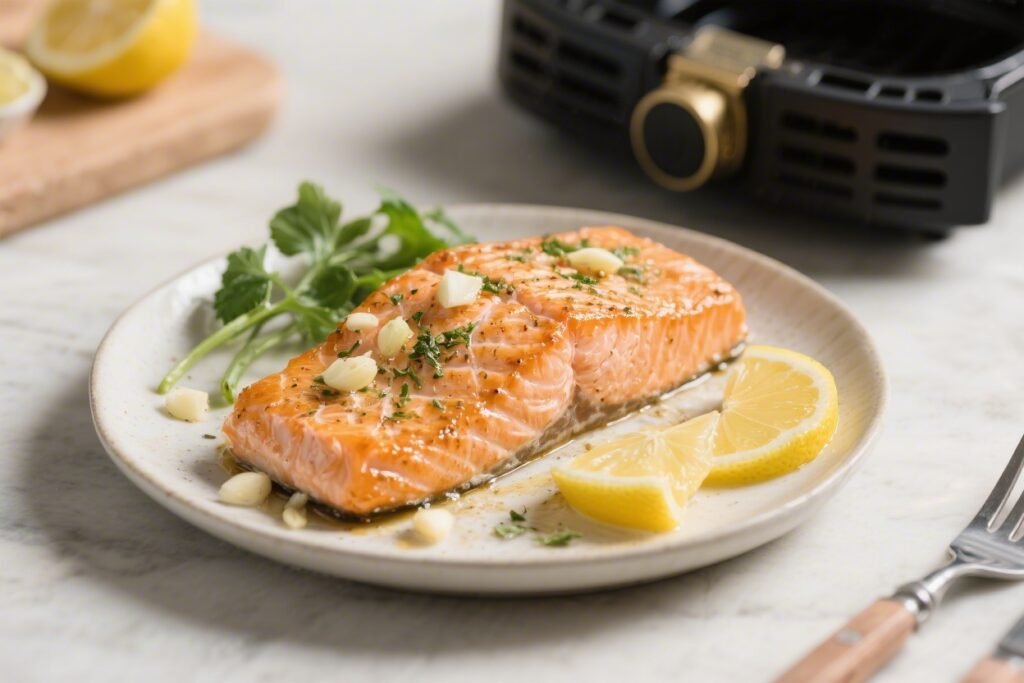
If you want a weeknight dinner that tastes like a special occasion, this is it. Lemon, garlic, and a touch of olive oil turn salmon into a bright, zesty, restaurant-worthy meal in under 15 minutes. The air fryer gives you juicy fillets with crisped edges and zero fuss.
It’s simple, fresh, and reliable—perfect for beginners and busy cooks alike. Pair it with veggies or a quick salad, and dinner is done.
What Makes This Recipe So Good
- Fast and easy: From start to finish, this salmon is ready in about 15 minutes, including prep time.
- Consistently tender: The air fryer cooks evenly, so your salmon stays moist inside with lightly crisp edges.
- Bright, clean flavors: Lemon and garlic lift the richness of salmon without overpowering it.
- Minimal cleanup: One bowl for the marinade and a lined air fryer basket—done.
- Nutrient-dense: Packed with omega-3s, protein, and antioxidants from fresh lemon and garlic.
Recipe Cards
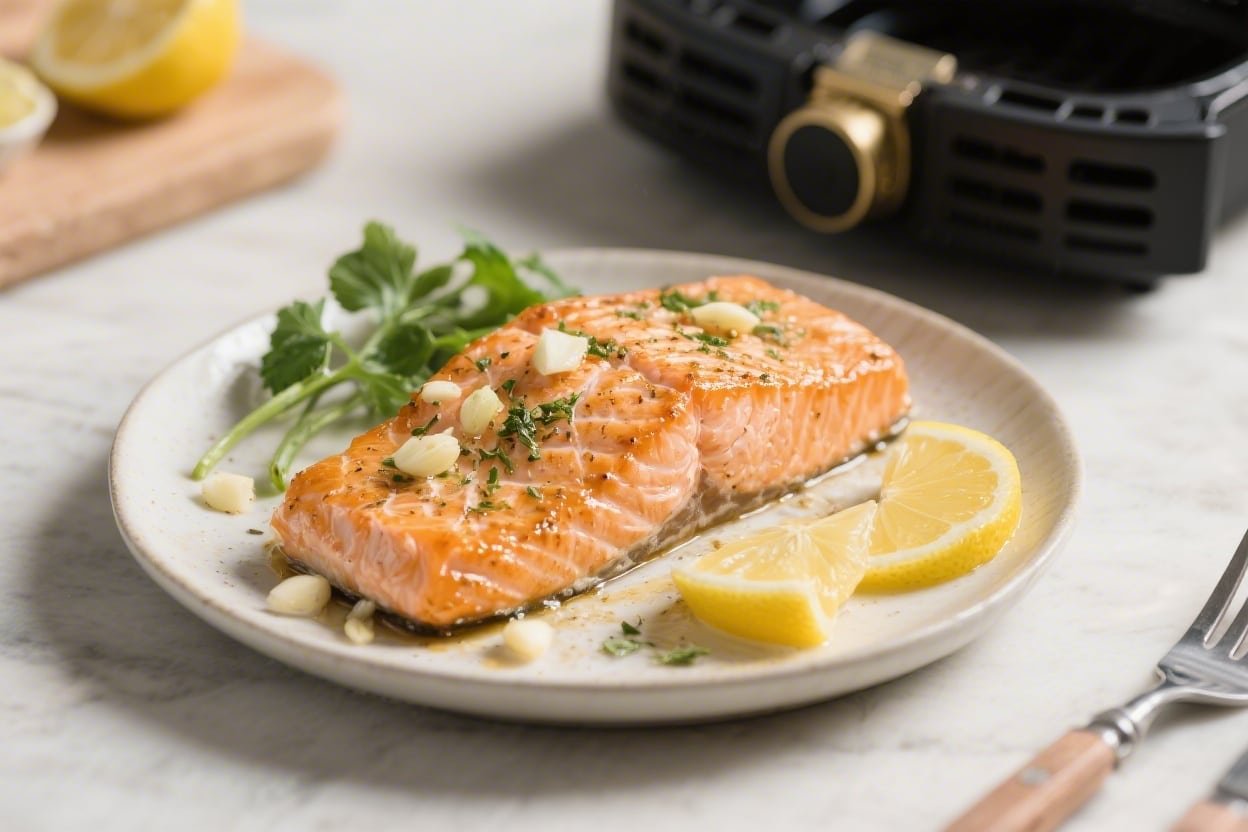
Healthy Air Fryer Lemon Garlic Salmon
Ingredients
Method
- Preheat the air fryer: Set to 390°F (200°C). Preheating helps the salmon cook evenly and form a light crust.
- Pat the salmon dry: Use paper towels to remove excess moisture. Dry fish sears better and won’t steam.
- Mix the marinade: In a small bowl, combine olive oil, lemon zest, lemon juice, garlic, Dijon (if using), honey (if using), salt, pepper, paprika, and red pepper flakes. Stir until glossy and emulsified.
- Coat the fillets: Brush or spoon the mixture over the top and sides of the salmon. If the skin is on, leave the skin side mostly plain so it crisps.
- Prep the basket: Lightly spray the basket with olive oil spray or line with perforated parchment made for air fryers. This reduces sticking.
- Arrange the salmon: Place fillets in the basket in a single layer, skin side down if using skin-on. Leave a little space between pieces for airflow.
- Air fry: Cook for 7–10 minutes, depending on thickness. Start checking at 7 minutes. The salmon is done when it flakes easily with a fork and reaches 125–130°F in the thickest part for medium, or up to 145°F if you prefer well-done.
- Rest briefly: Let the salmon sit for 2 minutes after cooking. Residual heat finishes the job and keeps it juicy.
- Garnish and serve: Sprinkle with chopped parsley or dill and serve with lemon wedges. It’s great with roasted asparagus, a simple arugula salad, quinoa, or garlic green beans.
How to Store
- Refrigerator: Store cooled salmon in an airtight container for up to 3 days.
- Freezer: Wrap individual fillets tightly and freeze for up to 2 months.
Thaw overnight in the fridge.
- Reheating: Air fry at 320°F (160°C) for 3–4 minutes, or warm gently in a skillet over low heat with a splash of water and a lid. Avoid microwaving on high, which can dry it out.
Benefits of This Recipe
- Heart-healthy fats: Salmon is rich in omega-3s, which support heart, brain, and joint health.
- High-quality protein: Keeps you satisfied and supports muscle recovery.
- Lower oil use: The air fryer needs only a little oil, so you get crisp edges without deep frying.
- Simple ingredients: Lemon, garlic, and pantry staples deliver big flavor with minimal effort.
- Flexible: Works with fresh or thawed frozen salmon and pairs well with many sides.
What Not to Do
- Don’t overcrowd the basket: Crowding blocks airflow and leads to uneven cooking.
- Don’t skip drying the fish: Excess moisture keeps the surface from crisping and can water down the seasoning.
- Don’t overcook: Salmon goes from perfect to dry quickly. Start checking early and use a thermometer.
- Don’t add too much lemon juice upfront: Acid can “cook” the surface and make it mushy.
The listed amount balances flavor without breaking down the fish.
- Don’t use thick, sticky parchment: Only use perforated parchment designed for air fryers to keep airflow steady and avoid scorching.
Alternatives
- Herb swaps: Try dill, chives, basil, or cilantro instead of parsley. Fresh thyme also works well.
- Citrus twists: Use lime or orange zest for a different vibe. Lime plus cilantro leans more tropical.
- Spice it up: Add a pinch of cayenne, chili powder, or your favorite seafood seasoning.
- No mustard? Skip it, or replace with a small spoon of Greek yogurt for creaminess.
- No honey? Omit it or use a drop of maple syrup.
The goal is to balance acidity, not make it sweet.
- Skin-on vs. skinless: Skin-on stays juicier and releases easier from the basket. If using skinless, line the basket well and handle gently.
- Different fish: This method also works with trout, Arctic char, or halibut. Adjust cook time based on thickness.
FAQ
Can I use frozen salmon?
Yes.
Thaw it overnight in the fridge, then pat very dry before seasoning. If cooking from frozen, add 3–5 minutes and season halfway through once the surface thaws slightly.
How do I know when salmon is done without a thermometer?
Press gently with a fork. If it flakes easily and the center turns from translucent to opaque with a hint of gloss, it’s done.
The edges should look set, and juices run clear.
Do I need to marinate the salmon?
No. The quick coating is enough, and the acid in lemon can start breaking down the fish if left too long. If you want more flavor, let it sit for 10–15 minutes, but not longer than 30.
What temperature is best for air fryer salmon?
A range of 380–400°F (193–204°C) works well.
At 390°F, you’ll get a tender interior with lightly crisp edges in under 10 minutes for average-thickness fillets.
How can I prevent sticking?
Use a light oil spray and, if desired, perforated parchment. Also, don’t try to lift the salmon too soon. Once it’s cooked, it releases more easily from the basket.
What sides go well with lemon garlic salmon?
Great options include roasted asparagus, sautéed green beans, couscous, quinoa, lemony rice, garlic mashed cauliflower, or a simple arugula salad with olive oil and parmesan.
Can I double the recipe?
Yes, but cook in batches so you don’t crowd the basket.
Keep the first batch warm in a 200°F (95°C) oven for a few minutes while you finish the rest.
Is the skin edible?
Absolutely. When cooked well, salmon skin becomes pleasantly crisp and flavorful. If you prefer, you can peel it off after cooking—heat makes it release easily.
Wrapping Up
Healthy Air Fryer Lemon Garlic Salmon is the kind of recipe you’ll lean on again and again.
It’s quick, vibrant, and fits into almost any meal plan. With just a few fresh ingredients, you get big flavor and a satisfying, feel-good dinner. Keep a couple of fillets in the freezer, some lemons on hand, and you’re always minutes away from a great meal.